Everyday in NH
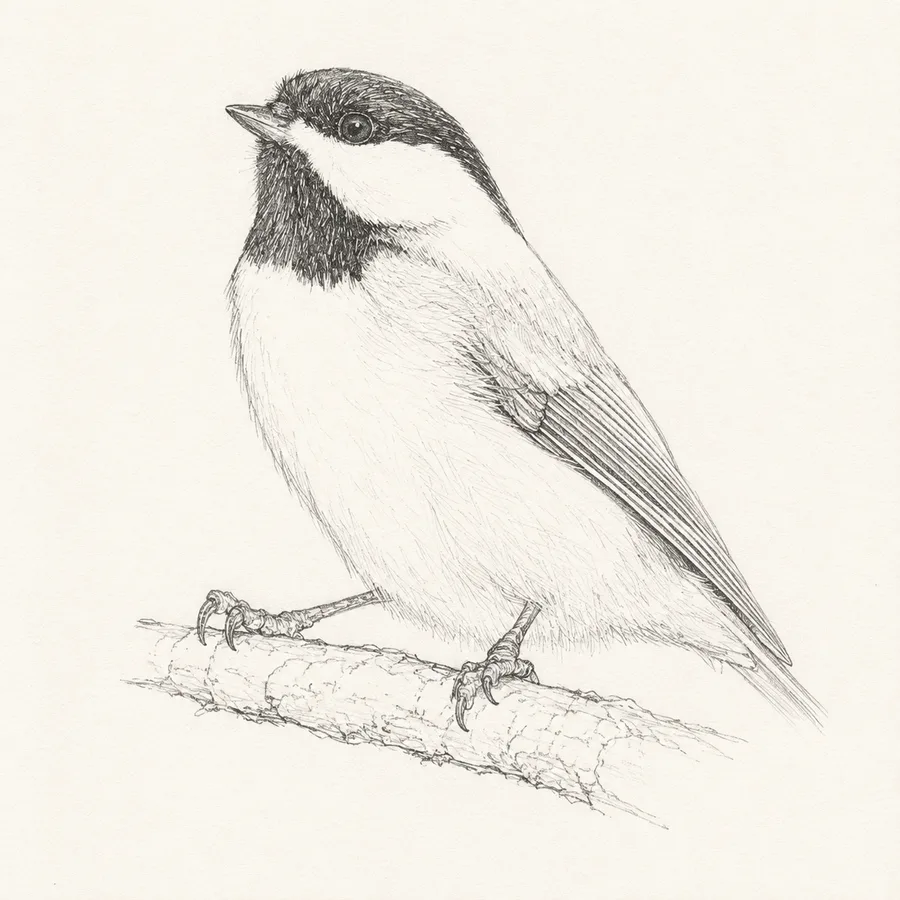
Black-capped Chickadee
Poecile atricapillus · Tits and Chickadees (Paridae)
- Status
- Year-round resident, every county
- Length
- 4.7–5.9 in
- Regions
- Coast · Merrimack · Lakes · The Whites · Conn. River
Couldn't load a clip just now —listen on xeno-canto ↗
What you notice first
The name, called back at you — a bright, buzzy "chick-a-dee-dee-dee" from a shrub six feet away, before you've even seen the bird.
Voice
Two whistled notes, high then low — "fee-bee" — plus the scolding chick-a-dee call whose number of "dee" notes rises with how alarmed the bird is.
Where & when
Any wooded yard, town park, or trailhead, all twelve months. First bird at a new feeder, usually within a day.
If you are going to learn one New Hampshire bird, it is this one, and you have probably already learned it without trying. Black-capped Chickadees run the winter woods — literally, in the sense that mixed flocks of nuthatches, kinglets, and woodpeckers form up around them and follow their lead on where to feed and when to freeze.
Look for the crisp black cap and bib against white cheeks, the small round body, the way it hangs upside down off a twig tip to work a seed. In cold snaps they drop their body temperature at night to save fuel — a bird this small has no other option at −10°F.
They cache food constantly through fall, thousands of seeds a day, and remember where. That is most of what a chickadee is doing while it ignores you at the feeder.